Wired vs Wireless CCTV

The wired vs wireless CCTV debate is not really about which technology is “better” — it is about which fits your property, budget, and tolerance for maintenance. A four-camera wired system on a Watford semi-detached house presents a completely different challenge from covering stables eighty metres from a farmhouse in Ware. Understanding the trade-offs prevents expensive mistakes.
How wired CCTV works
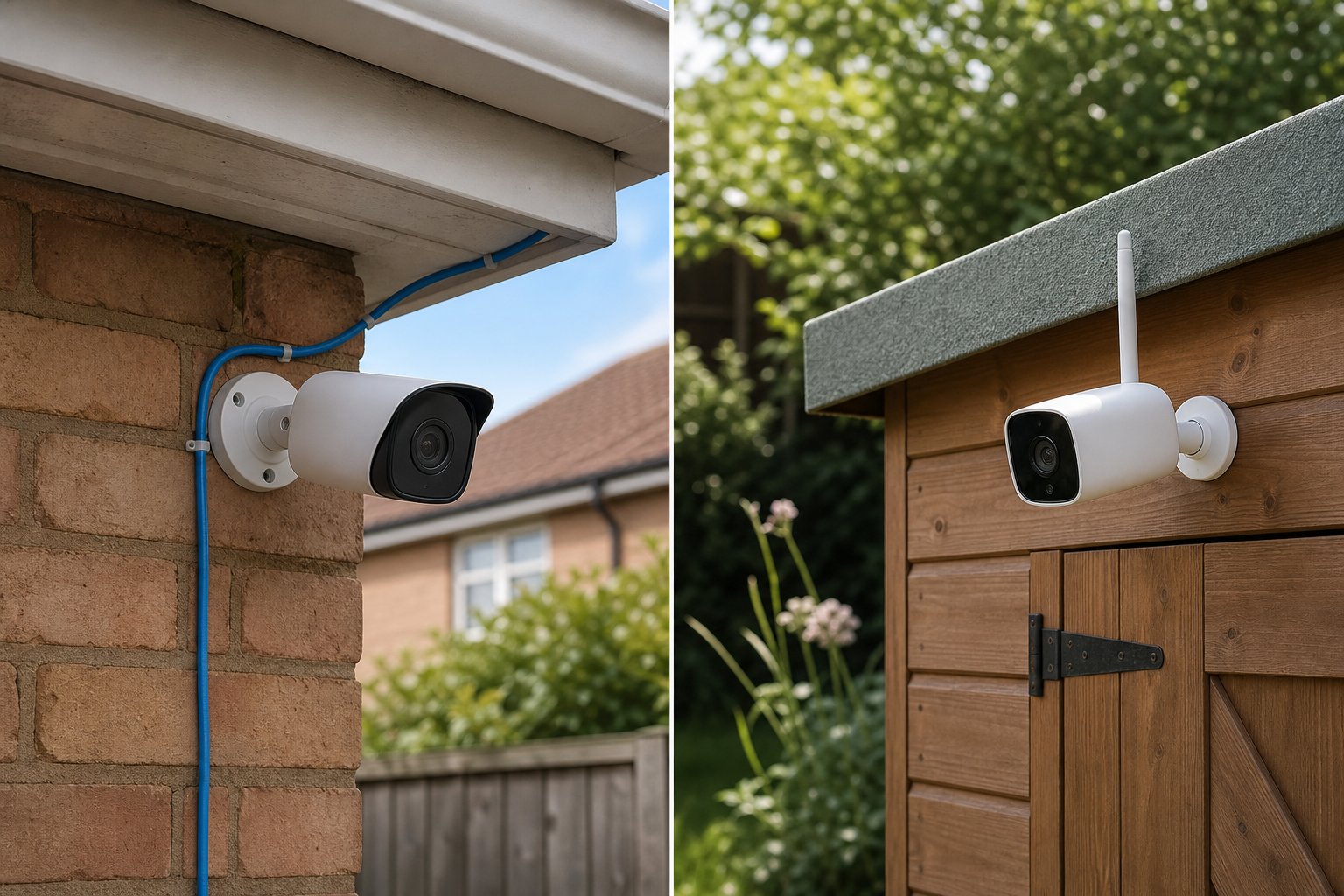 PoE delivers stable power and data over a single cable run.
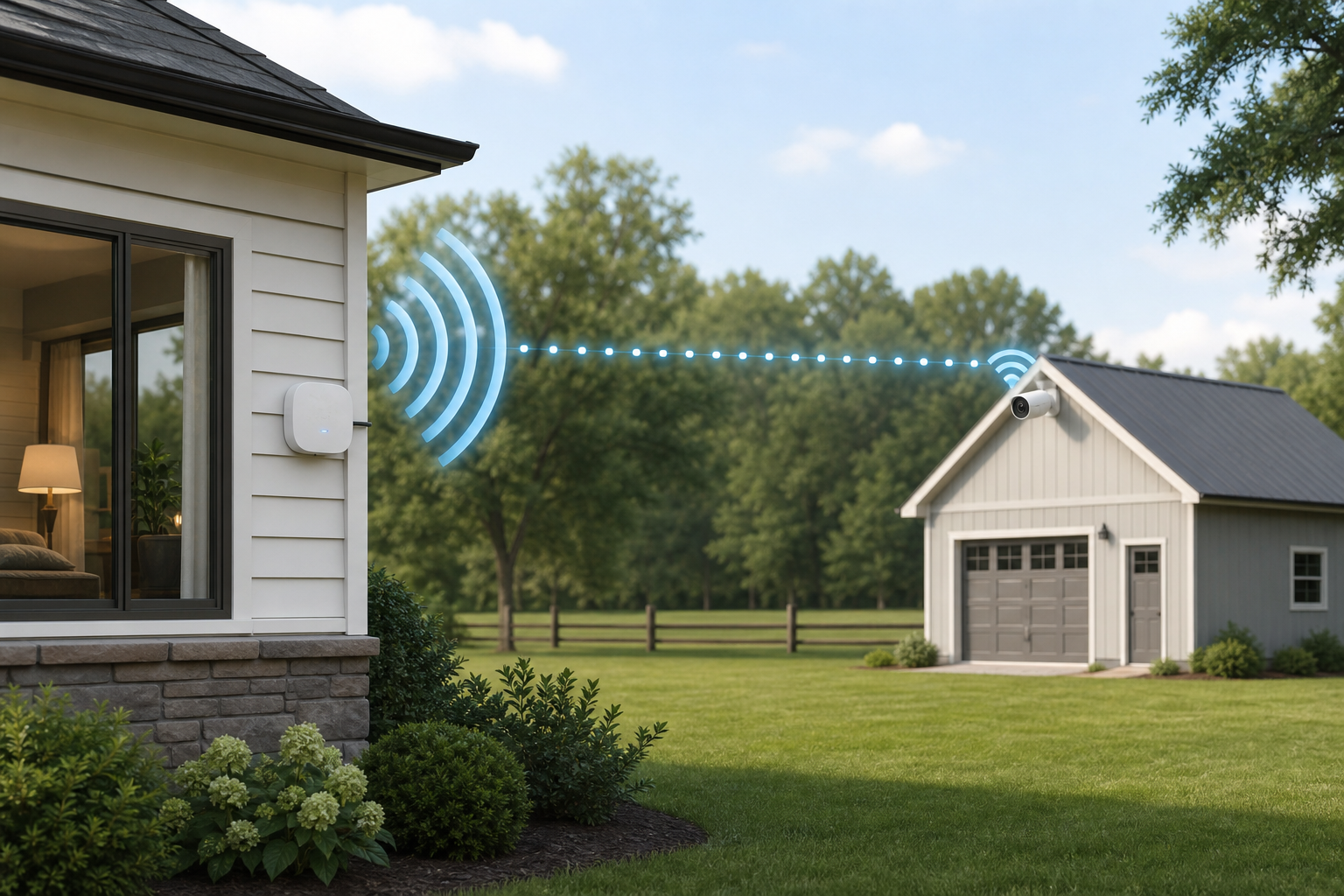 Wireless nodes suit outbuildings where cabling is impractical.
Modern wired systems use Power over Ethernet (PoE): a single Cat6 cable carries power and data from a network switch or NVR to each camera. Cameras receive stable power, full bandwidth, and continuous recording without worrying about Wi-Fi dropouts or flat batteries.
Advantages of wired CCTV
- Reliability — no dependency on Wi-Fi congestion, mesh extenders, or battery life
- Consistent quality — full bit rate for 4K recording; no compression spikes when signal weakens
- Lower long-term maintenance — no battery replacement schedules on cameras
- Cleaner security model — fewer devices broadcasting wirelessly
- Insurance familiarity — professional wired installs are well understood by insurers
Disadvantages of wired CCTV
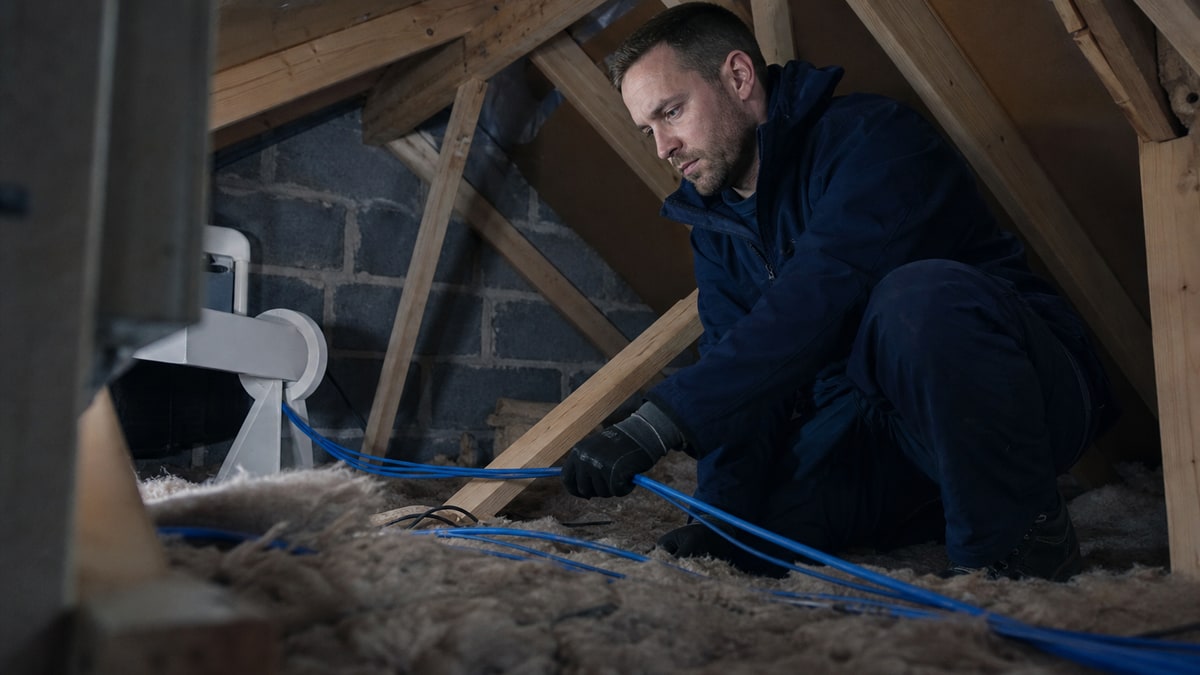
- Installation labour — cables must reach each camera, often through lofts, soffits, and walls
- Disruption — retrofitting in occupied homes takes longer than sticking up wireless cameras
- Distance limits — Ethernet runs to 100 metres per segment; beyond that needs switches or fibre
- Inflexibility — moving a camera means moving cable
For most permanent CCTV installation on houses and commercial premises, wired PoE is our default recommendation.
How wireless CCTV works
Wireless CCTV spans several distinct technologies:
- Wi-Fi cameras — connect to your router or mesh network; may be mains-powered or battery
- Wire-free battery cameras — entirely cordless; convenient but require regular charging or battery swaps
- Point-to-point bridges — dedicated wireless links between buildings, carrying multiple camera streams to a central NVR
Advantages of wireless CCTV
- Speed of deployment — useful where chasing cable is impractical
- Outbuilding coverage — stables, workshops, and gate posts without trenching
- Temporary sites — construction and event security before permanent infrastructure exists
- Heritage properties — avoids disturbing fabric where surface cabling is undesirable
Disadvantages of wireless CCTV
- Signal dependency — thick walls, metal cladding, and distance degrade performance
- Interference — neighbouring Wi-Fi, baby monitors, and microwave ovens affect 2.4 GHz bands
- Battery maintenance — forgotten batteries mean no footage when you need it most
- Bandwidth limits — multiple 4K streams can overwhelm consumer routers
- Security configuration — poorly secured Wi-Fi cameras are a known attack surface
We survey signal strength and obstructions before specifying wireless CCTV — never assume Wi-Fi reaches the bottom of the garden.
Hybrid systems — often the right answer
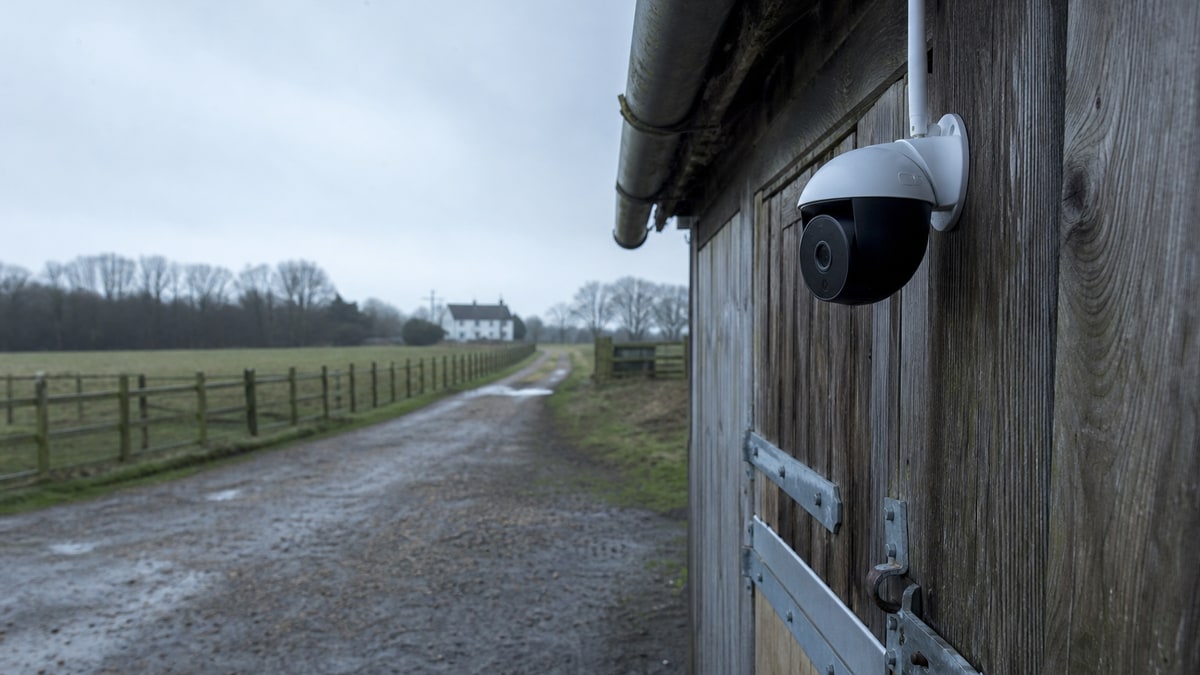
On larger Hertfordshire properties, hybrid designs work well:
- Wired PoE backbone at the main house with NVR storage
- Point-to-point wireless link to outbuildings
- Two to four wireless cameras at remote points fed back over the bridge
This delivers centralised recording and reliable remote feeds without trenching across paddocks or driveways. We completed a similar approach for a Ware smallholding — wireless to stables, wired at the house.
Comparing costs honestly
Wireless kits appear cheaper upfront because they skip installation labour. Factor in:
- Repeat call-outs when signal proves inadequate
- Battery replacements across multiple cameras
- Cloud subscriptions for some consumer brands
- Shorter equipment life on budget hardware
Professional wired installation costs more initially but typically delivers lower total cost of ownership over five to ten years — especially for business CCTV where downtime has direct financial impact.
Use-case guide
| Scenario | Recommended approach |
|---|---|
| Suburban house — 4 cameras | Wired PoE |
| Flat with limited alteration rights | Wireless or doorbell camera — check lease |
| Listed building — minimal fabric disturbance | Wireless sensors; surface trunking where permitted |
| Office / retail | Wired PoE |
| Warehouse yard + building | Wired internally; wireless or fibre for perimeter |
| Remote gate 50–200 m from house | Point-to-point bridge + wired or wireless cameras at gate |
| Temporary construction site | Wire-free battery with solar where viable |
Smart features across both types
Person detection, line crossing, and mobile alerts work on both wired and wireless platforms — but only if the network and recorder support them. Cheap wireless kits often promise “AI detection” with limited accuracy. Commissioning detection zones properly matters more than marketing labels.
Security considerations
Regardless of type:
- Change default passwords immediately
- Enable two-factor authentication
- Keep firmware updated
- Segment IoT devices on a separate VLAN where possible (business networks)
- Do not expose recorders directly to the internet without proper hardening
Making the decision
Ask these questions before buying:
- How far are cameras from the recorder/router?
- Can cable be routed discreetly through loft or duct?
- Is the property listed or in a conservation area?
- How many cameras need 4K identification vs general coverage?
- Who maintains batteries if wireless?
- What retention period does insurance require?
A site survey answers these with evidence — signal tests, cable routes, and a fixed quotation — rather than guesswork.
We install wired, wireless, and hybrid systems across St Albans, Harpenden, and the wider county. Related reading: best CCTV systems for 2026 and CCTV installation cost.
Not sure which approach fits your property? Request a free site survey — we test signal, plan cable routes, and recommend the most reliable option for your site.

