Best Home Alarm Systems

A well-specified intruder alarm remains one of the most cost-effective ways to protect a Hertfordshire home. Visible external sounders deter opportunist burglars; internal sensors catch intruders before they reach bedrooms; and modern systems arm from your phone as easily as from a keypad. The challenge is cutting through marketing noise to find equipment that detects reliably, false-alarms rarely, and satisfies your insurer.
What makes a good home alarm system?
The best house alarm systems share common traits:
- Grade 2 or equivalent components where insurers specify professional standards
- Dual-tech or pet-friendly PIRs to reduce false triggers from pets and heating drafts
- Door and window contacts on vulnerable entry points — not motion alone
- External sounder with visible bell box — proven deterrent effect
- Multiple arming modes — full away, night partial, and garage-only zones
- App control with optional key fobs for household members who prefer not to use phones
- Monitoring-ready communication path if you want keyholder or ARC response later
Cheap DIY alarms rarely deliver all of this. Professional burglar alarm installation includes survey, positioning, testing, and documentation.
Wireless vs wired alarms
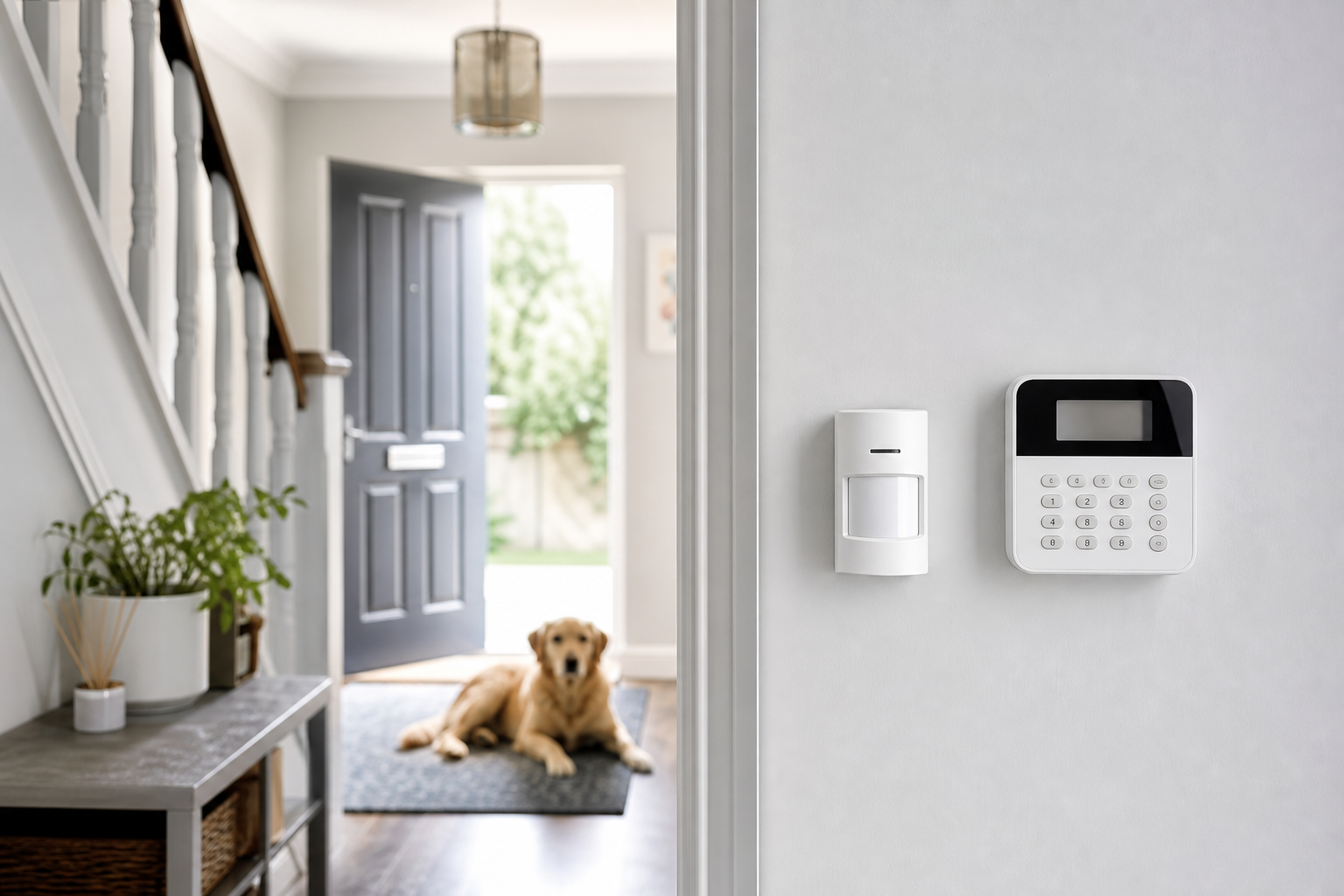 Pet-friendly sensors reduce false alarms in family homes.
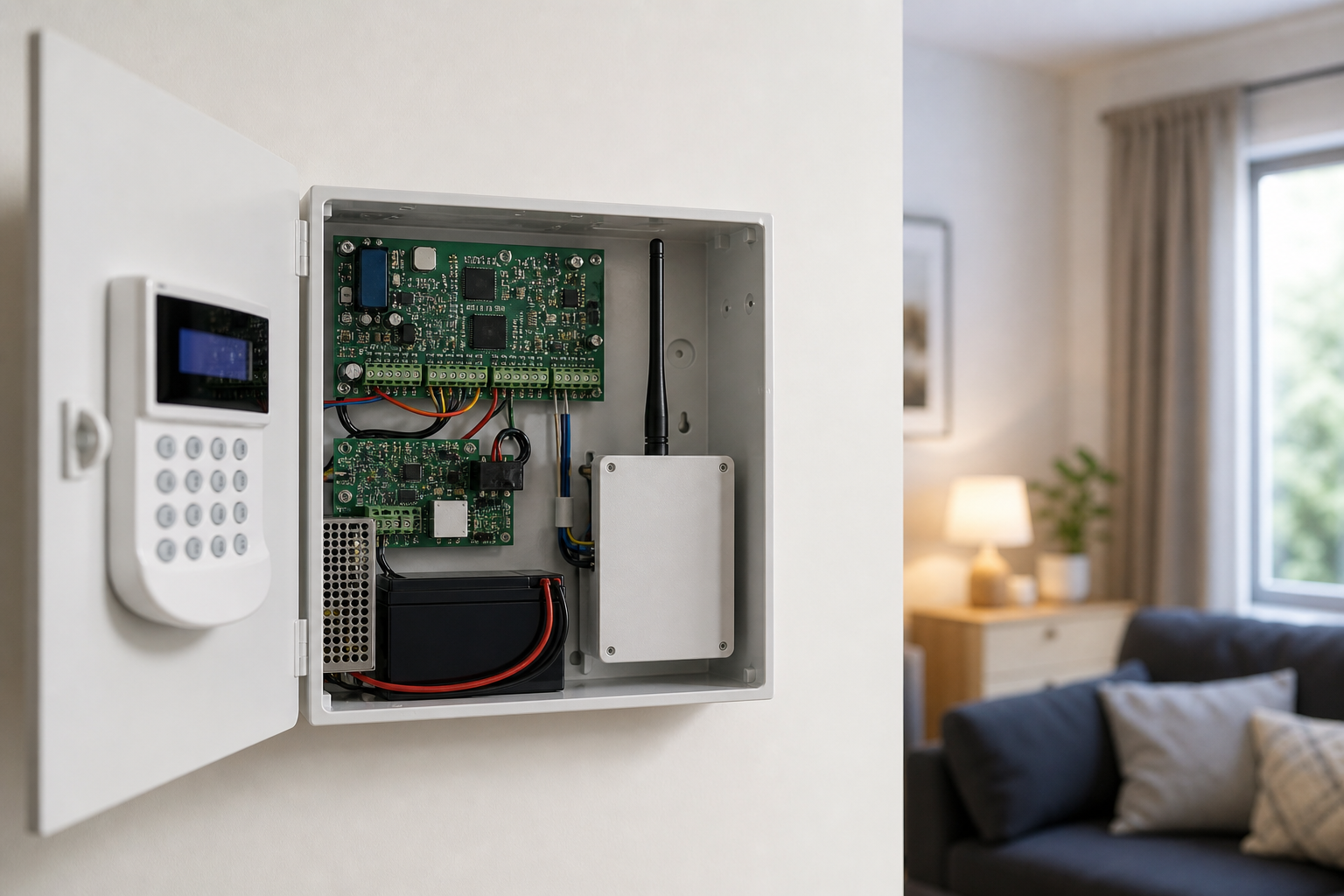 Dual-path monitoring adds resilience if broadband fails.
Wireless alarms
Wireless alarm systems suit:
- Period properties in Hertford and St Albans where chasing cables damages plaster
- Retrofits where speed and minimal disruption matter
- Homes that may need sensors added later (extensions, loft conversions)
Modern wireless sensors use encrypted communication and multi-year battery life. Batteries must be replaced on schedule — typically part of an alarm maintenance visit.
Wired alarms
Wired systems suit:
- New builds and major renovations where cable can be installed before second fix
- Larger properties needing many sensors
- Homeowners who prefer no battery dependency on detection devices
Installation takes longer but ongoing sensor maintenance is lower.
Pet-friendly detection
Standard PIR sensors trigger on any heat movement — problematic with dogs and cats. Pet-friendly or dual-tech sensors (PIR plus microwave) reduce false alarms while maintaining security. Be honest about pet size and behaviour during survey; a sensor that ignores a cat may not ignore a large dog at close range.
Smart home integration
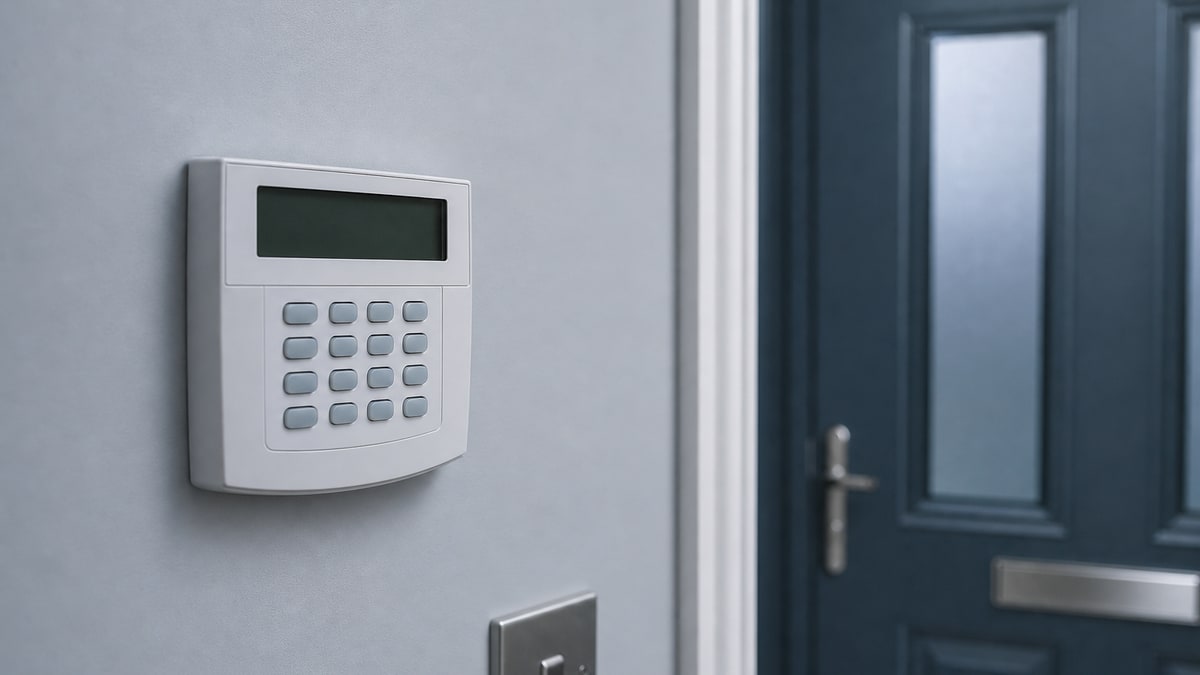
Smart home security platforms unify alarms with cameras, doorbells, and smart locks. Useful automations include:
- Arm alarm when last phone leaves a geofence
- Disarm when first person arrives home
- Trigger camera recording when alarm activates
- Flash smart lights on activation to simulate occupancy
Integration adds complexity — professional commissioning ensures automations do not create gaps (e.g. disarming because a phone GPS glitched).
Monitoring options
Three common paths:
- Audible only — external sounder alerts neighbours; you respond
- Keyholder monitoring — system calls or texts nominated contacts on activation
- Alarm Receiving Centre (ARC) — professional monitoring with police response where applicable and system meets standards
Monitoring adds monthly cost but suits properties with high value contents, extended absences, or insurer requirements. Systems can be installed monitoring-ready even if you activate later.
Visible deterrence matters
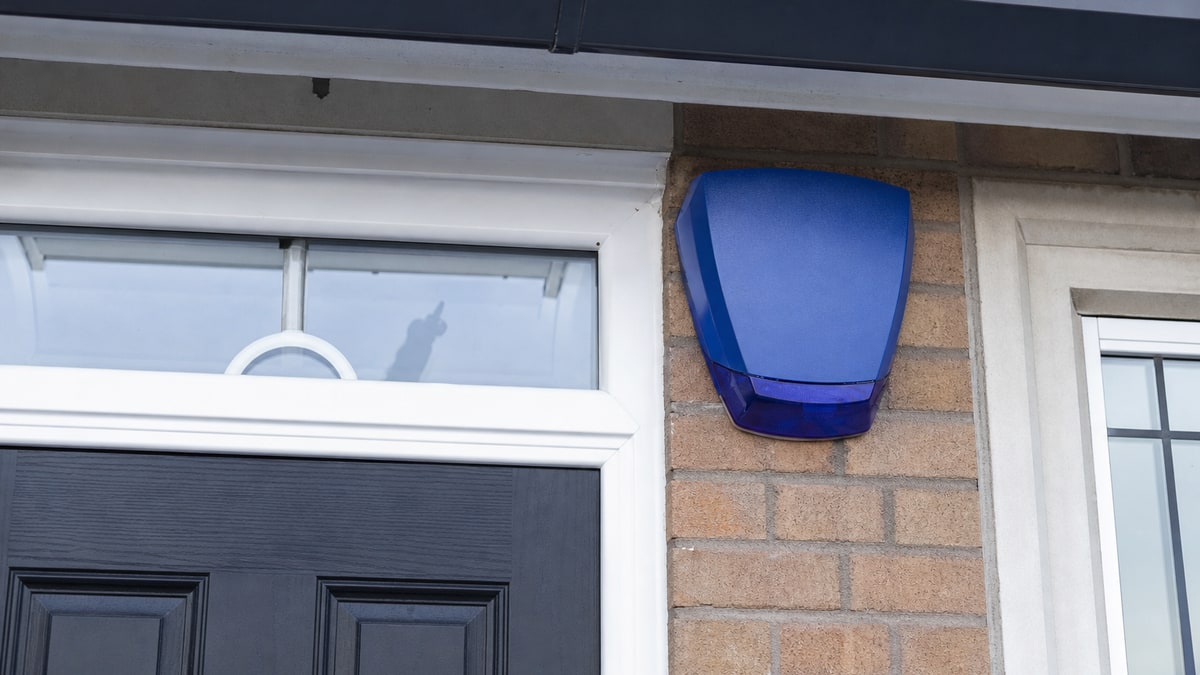
Burglars look for easy targets. An external Grade 2 sounder with branded bell box signals that the property is protected. Stickers alone do less. Position the sounder where it is visible from the street without dominating a listed facade — we advise on placement in conservation areas across Hertfordshire.
Zoning and night mode
Flexible zoning lets you:
- Arm ground floor while upstairs is excluded — night mode for family safety
- Arm garage and garden room separately from the house
- Omit rooms with pets or overnight guests
Poor zoning causes daily frustration and leads people to stop arming — defeating the purpose.
What insurers expect
Insurers often ask:
- Is the system professionally installed?
- Is there a maintenance contract?
- Does it meet BS EN 50131 / PD 6662 standards?
- Is monitoring in place?
Keep installation certificates and user guides. We provide documentation at handover for Harpenden and Welwyn Garden City clients submitting policy details.
Common mistakes to avoid
- Motion-only systems — contacts on doors are essential
- Sensors facing windows — heat from sun or curtains causes false alarms
- Shared codes never changed — former cleaners or trades still knowing codes
- Ignoring battery warnings — wireless sensors fail silently when batteries die
- No external sounder — internal-only sirens help less as deterrents
Comparing with CCTV
Alarms and CCTV complement each other. Alarms provide immediate response and deterrence; CCTV provides evidence and remote verification. Combined packages are common — see our CCTV installation and alarm services for integrated quotes.
Choosing an installer
Look for:
- SSAIB or NSI certification
- Survey before quotation — fixed price after site visit
- Clear explanation of zones and daily use
- Takeover of existing systems where viable
- Local support for faults and maintenance
Upgrade and takeover paths
Moving into a house with an existing alarm? We often upgrade panels, replace failing sensors, and recommission rather than scrapping everything. This saves cost when wiring and device positions are already sound.
Ready to protect your home properly? Book a free site survey for house alarm systems specified around how your household actually lives — across Hertfordshire.

